
Free printable winter flock checklist
Work down it before the first hard freeze: vents up high, 4 to 6 inches of dry bedding, a heated waterer on a GFCI outlet, wide wooden roosts, extra feed and grit, and the coop shut at dusk. Every number on it comes from an extension service.
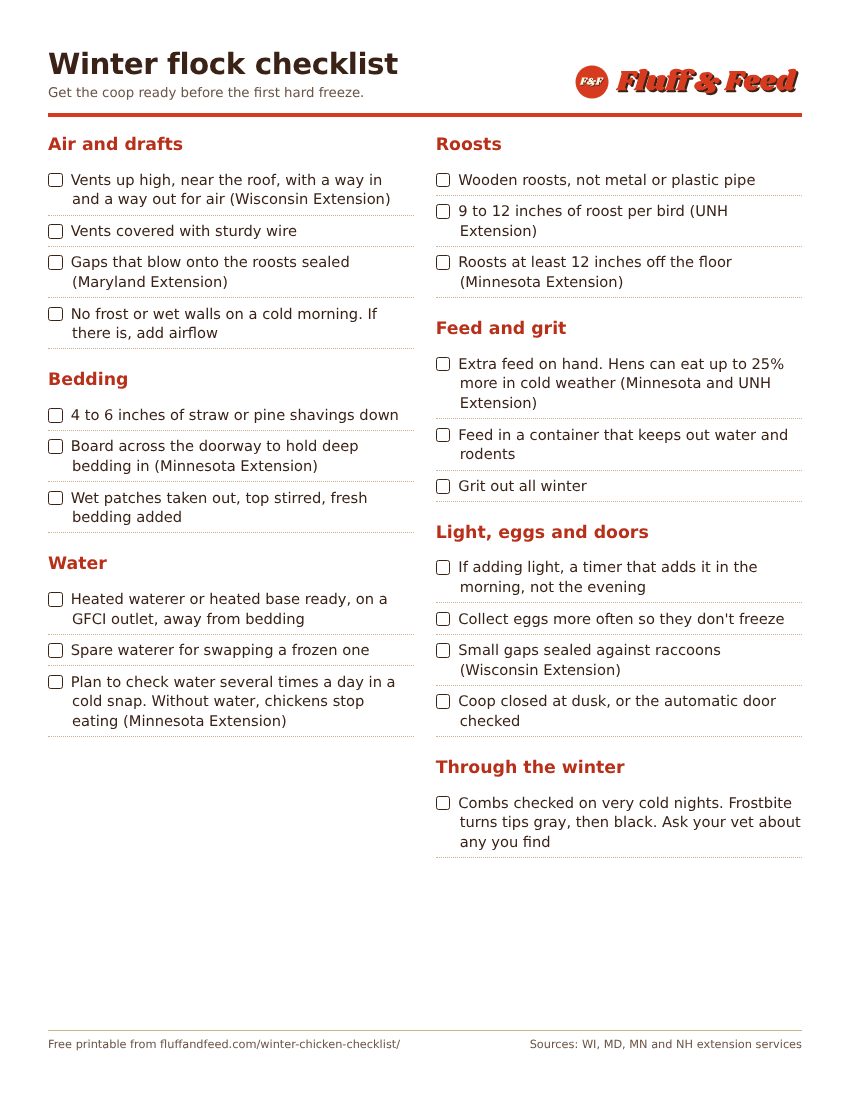
A one-page checklist for getting your coop and flock through the cold. Work down it in fall, before the first hard freeze, and keep it on the coop door for the winter. It's free, with no email needed.
Download the winter checklist (PDF, 1 page)
What's on it
- Air and drafts: high vents, wire over them, drafts sealed, a frost check.
- Bedding: 4 to 6 inches down, a doorway board, wet patches out.
- Water: a heated waterer or base on a GFCI outlet (5), and a spare.
- Roosts: wood, enough room, high enough off the floor.
- Feed and grit: extra feed, a sealed bin, grit all winter.
- Light, eggs and doors: morning light only, eggs collected often, gaps sealed, the coop closed at dusk.
Where the numbers come from
Every number on the sheet comes from an extension service. Bedding goes 4 to 6 inches deep, and roosts sit at least 12 inches off the floor. Hens can eat up to 25 percent more feed in cold weather, and they stop eating without water (1). Give each bird 9 to 12 inches of roost (2). Seal drafts (3), but keep air moving and raccoons out (4). The full reasoning is in our winterize your coop guide.
Most healthy hens don't need a heater. See do chickens need heat in winter. If you find frostbite on a comb or toes, ask your vet (6).
More free printables
- Egg laying log: count the eggs each day, a month on one page.
- Chicken chore chart: daily, weekly and monthly jobs to tick off.
 More questions about winter care
Is the winter flock checklist free?
Yes. Download the PDF and print it. You don't need to give an email address.
How much more do chickens eat in winter?
Up to 25 percent more. Per University of Minnesota Extension, hens can eat up to 25 percent more feed in cold weather, and they stop eating if their water freezes.
Sources
- University of Minnesota Extension: Caring for chickens in cold weather. Bedding depth, doorway board, water, up to 25 percent more feed, grit, morning light, roost height.
- UNH Extension: How Should I Take Care of Backyard Chickens in the Winter?. Roost space, feed, collecting eggs.
- University of Maryland Extension: Winter Weather and Small Flocks. Sealing drafts, checking water several times a day.
- UW-Madison Extension: Preparing for Winter. Air in and out, wire over vents, gaps sealed against raccoons.
- U.S. Consumer Product Safety Commission: What Is a GFCI?. GFCI protection for outdoor outlets.
- Extension Foundation: Frostbite in Chickens. What frostbite looks like.
