
What can chickens eat?
Safe treats and kitchen scraps, foods never to feed, and how much is too much.
What should chickens never eat?
Avocado, chocolate, raw or dry beans and moldy food (3). Salty food, green potato peels, coffee and alcohol (3). Fruit pits and apple seeds can harm them too (3).
- Avocado: the skin and pit are the worst parts (3).
- Chocolate and coffee: caffeine and theobromine (3).
- Raw or dry beans: a natural toxin (3).
- Moldy or rotten food: can carry toxins and bacteria (3) (1).
- Salty junk food: dehydration and kidney damage (3).
- Onions: fine in small amounts, harmful in large ones (3).
Tip: Keep a lidded scrap bucket just for the hens, and empty it daily. (1)
Do chickens need grit or oyster shell?
Birds that forage on pasture need grit to digest it (1). Laying hens should have oyster shell free choice (1). Keep grit out all winter, when pebbles are buried (5).
Grit and oyster shell do different jobs. Grit grinds food in the gizzard. Oyster shell adds calcium for eggshells (1).
Offer each in its own feeder, separate from the main feed.
Can I make my own chicken feed?
You can, but balancing it is hard. Moldy feed holds toxins even after mold is removed (1). Most keepers feed a complete commercial feed (1).
Keep any feed cool, dry and sealed (1). If you want organic or non-GMO, several complete layer feeds are sold that way. Compare them on our layer feed page.
Gear that helps
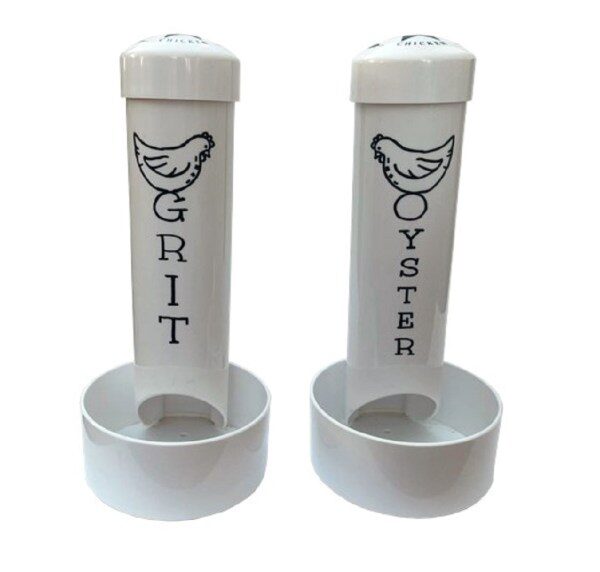
Revolutionary Chicken Oyster Shell and Grit Feeder
Grit and oyster shell, each on its own side.
Purina Layena Layer Pellets
A complete layer feed.
DuMOR Organic 16% Egg Layer Crumbles
Organic complete layer feed (maker's label).
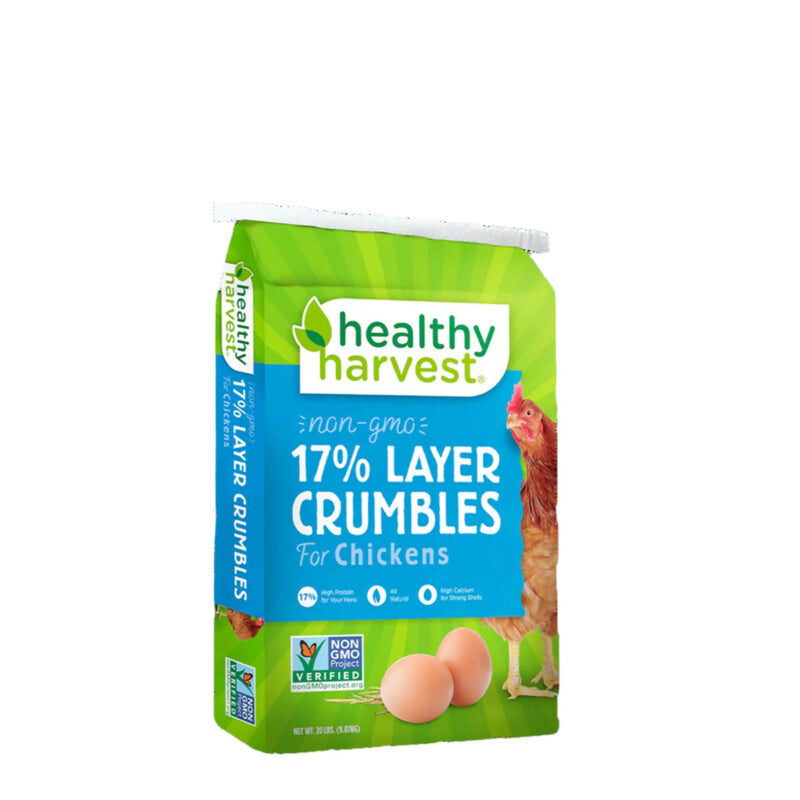
Healthy Harvest 17% Non-GMO Layer Crumbles
Non-GMO complete layer feed (maker's label).


Hey thanks for stopping by, we hope we were able to help you. If we did, and if you buy through one of our links, we may earn a small commission at no extra cost to you. We appreciate it.
 More questions about feeding chickens
Can chickens eat tomatoes?
One extension guide lists tomatoes on its don't-feed list (1). Skip them to be safe.
Sources
- University of Kentucky Extension: Feeding backyard chickens (ASC-241).
- Oklahoma State University Extension: Backyard flock production.
- UF/IFAS Extension, Holmes County: 10 foods you should never feed chickens.
- Oregon State University Extension: Why did my chickens stop laying? (PNW 565).
- University of Minnesota Extension: Caring for chickens in cold weather.
